


The Young of Butterflies

Are caterpillars gross?
Image: Hamsterkiste
1 Please pay more attention!

An adult beech moth caterpillar
Image: Kurt Kulac CC-BY-SA-2.5
The other day, you nearly stepped on me. Yes, you! I’d be a squashed mess now. You were out with some other children and just walked right past me. I was really panicking because you weren’t paying any attention at all. But that’s how you humans are. Since you’re here now, though, I can tell you a little more about myself. I’m a caterpillar. Caterpillars are baby butterflies and moths. There are lots of different kinds of us. You humans have come up with a different name for each kind. You call me and my parents the Pale Tussock. I’ve heard that you humans think adult butterflies and moths are colorful and beautiful. But you often treat us children—caterpillars and pupae—terribly. You think we’re disgusting. I wonder what we think of you, you human children with your terribly big feet! One day I’ll be a fully grown moth. Then I’ll look like the picture below. I’ll be able to fly and will be about 40 to 60 millimeters long. You gave us the name Pale Tussock because we live on beech trees and stretch our feet forward when we rest.
Find out:
1. Who is telling this story?
2. What kind of butterfly does this caterpillar belong to?
2 Butterflies develop from eggs

Brimstone butterfly egg - Pictures: Hamsterkiste

The caterpillar of a brimstone butterfly is almost indistinguishable from its surroundings
In the pictures below, you can see how butterflies develop. At first, there are just two yellow specks on a bud. They are eggs laid there by a butterfly mother. A few days ago, caterpillars hatched from these eggs. They are the offspring of a butterfly you call a brimstone. They live on green leaves and are green themselves, so birds don’t spot them as easily. Those monsters would gobble them right up.
Find out:
3. What do butterflies develop from?
4. What hatches from the eggs?
5. What protects the caterpillars?
6. What does the caterpillar turn into?
7. What is the doll’s costume called?
8. What develops from the pupa?
3 Day-flying butterflies
I’d also like to introduce you to the caterpillars of some other butterflies. The caterpillar in the first picture at the bottom left particularly likes nettle leaves. One day, it will also turn into a beautiful butterfly. You named this species the Small Tortoiseshell. You classify it as a butterfly that flies by day. That’s what you call butterfly species that are usually active during the day.

Small Tortoiseshell caterpillar

An adult small tortoiseshell butterfly - Image: Hamsterkiste
You often see lots of caterpillars on a plant, and soon there’s nothing left of it. All we caterpillars do is eat leaves, every day, for several weeks. As we do, we grow. When our skin gets too tight, we get a new one. Nature has come up with something really special for some of us. One caterpillar, for example, has stripes like a tiger. You might think it’s really dangerous, right? That’s sure to scare away lots of birds. Once the adult butterfly emerges, you can see two jagged points at its rear end. That’s why you call it a swallowtail. It would be a shame if this magnificent butterfly never saw the light of day.

Swallowtail caterpillar

An adult swallowtail butterfly
We caterpillars sometimes get rather crowded on the green leaves. Many of us are trying to eat our fill at the same time. In the pictures, you can see another caterpillar and, next to it, the butterfly it turns into. It is a peacock butterfly. These butterflies are especially colorful, with large bluish spots on their wings. They look like the eyes of a dangerous animal. Will the birds fall for it? Let’s hope so!

Peacock butterfly caterpillar
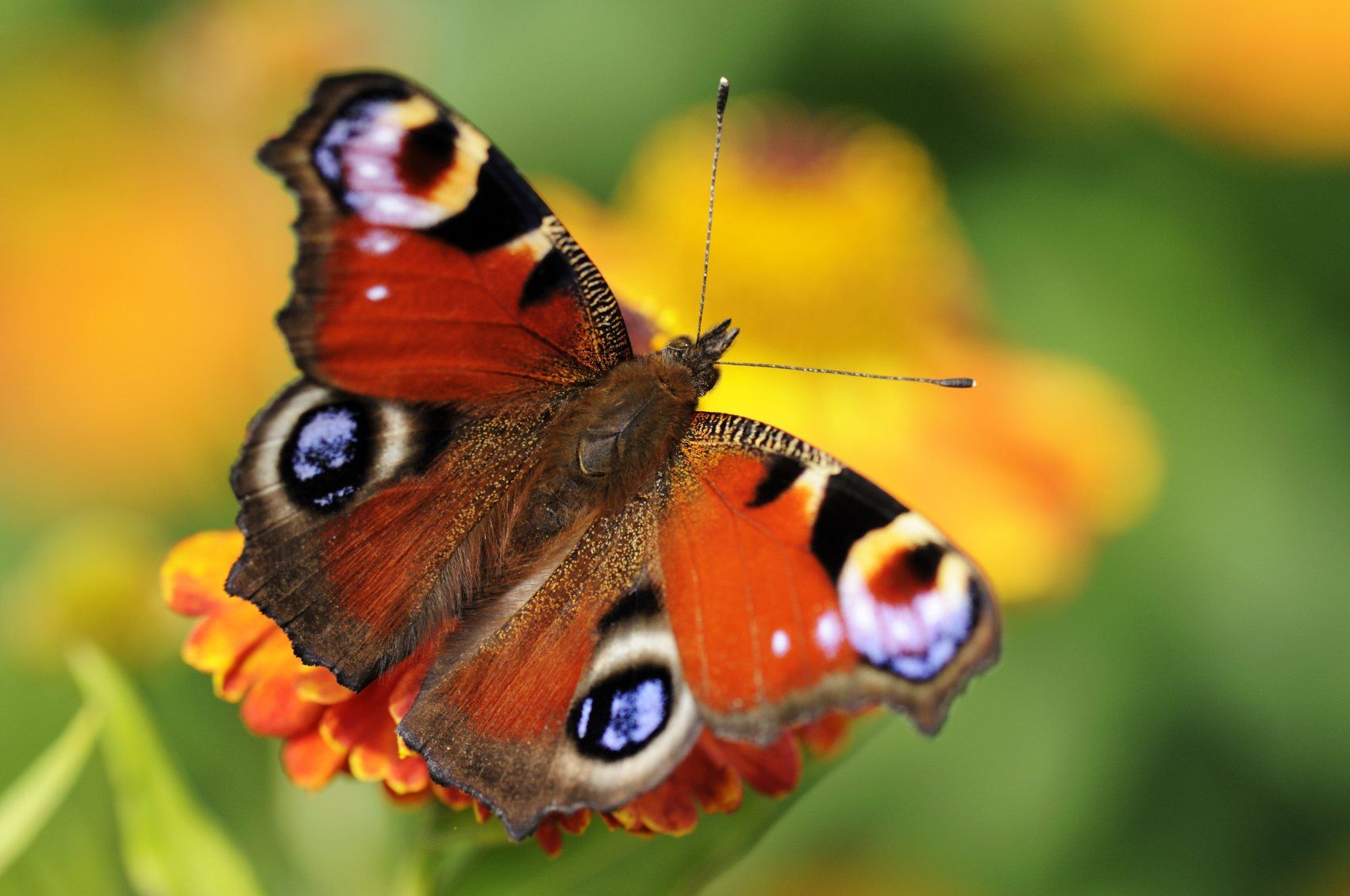
An adult peacock butterfly - Image: Hamsterkiste
Find out:
9. Which plants do Small Tortoiseshell caterpillars like best?
10. What are the stripes on swallowtail caterpillars for?
11. Which butterfly has especially vivid colors?
4 Moths
Some of us butterflies prefer evenings and nights. You humans call them moths. I’ve heard you also call moths “motten.” We beech tussock moths are moths, too. The pictures below first show the caterpillar of a butterfly you humans call the death’s-head hawkmoth. Its colour makes it hard to tell apart from the leaves, so birds and other predators have trouble spotting it. It particularly likes the leaves of potato plants. As a pupa, it buries itself in the ground. It is then about the size of a match and bright red. The adult butterfly flies only at night, so it is a moth. It got its name because it has a marking on the back of its head that looks like a human skull.

Death’s-head hawkmoth caterpillar - Image: Jean Pierre Hamon CC BY-SA 3.0

An adult Death's-head hawkmoth - Image: BetacommanddBot CC BY-SA 3.0
Admittedly, the caterpillar in the next picture isn’t exactly beautiful. It has lots of long hairs and hopes that birds will find it unappetizing. But as an adult moth, it’s especially striking. You call this species the garden tiger moth. Garden tiger moths also fly only at night. They’re rarely seen during the day, so they’re also classified as nocturnal moths.

Caterpillar of the Garden Tiger moth
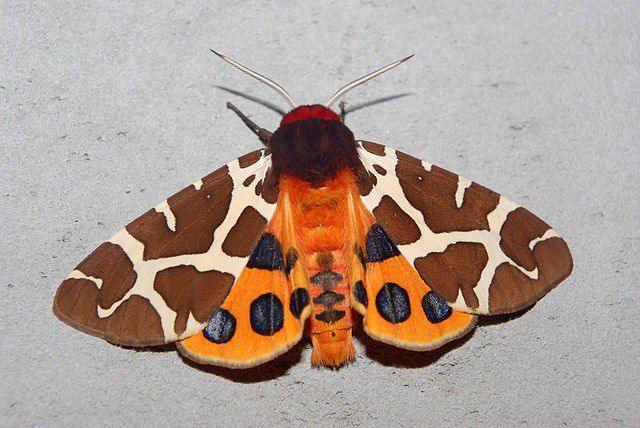
An adult brown bear
Find out:
12. What are butterflies called that are mostly active in the evening and at night?
13. Which butterfly, for example, belongs to this group?
5 Can kids be gross?

Puss moth caterpillar
Image: Hamsterkiste
Finally, I’d like to introduce you to my cousin. Among the caterpillars of the pale tussock moth, some are yellow like me, while others turn reddish brown. I know that many people think we caterpillars are ugly and disgusting. I say that’s not true. Is my beautiful cousin really ugly? And what about you? Do human children look lovely and beautiful, or ugly and disgusting? I think you should be kind to children, and children should stick together. I hope you’ll never be disgusted by us again, and above all, never simply stamp on us. Maybe you could even help us grow and develop. Just let a few wild plants bloom in meadows, along forest edges, in gardens or in the schoolyard. Thank you!
Find out:
14. Can children be gross?
15. How can you help butterflies develop well?