


This old windmill is in the municipality of Laar (Grafschaft Bentheim district) in Lower Saxony
Image: Hamsterkiste
Windmills
1 The Ruler and the Mill

The back of the mill with the turning box
Image: Hamsterkiste
There is a windmill in the small village of Laar. The village is in the district of Grafschaft Bentheim in Lower Saxony and borders the Netherlands. Many years ago, around 1800, the people of Laar were unhappy. Almost everyone was a farmer; life was hard and the work was difficult. Since there was no mill in the village, they had to travel long distances in horse-drawn wagons to have their grain ground in a neighboring village.
They were determined to have a mill of their own, so they turned to Count Ludwig zu Bentheim and Steinfurt. At the time, he was the ruler of the County of Bentheim, and the farmers hoped he would help them. In those days, a ruler owned most of the land and decided what was to happen in his county. Only he could decide whether a mill could be built. The farmers were delighted when the count replied. He wanted to have a mill built.
For the farmers, this meant that the mill belonged to the count, and they had to pay to use it. At the time, they were also required by law to use the lord’s mill. This was a medieval right that allowed the ruler to require farmers to take their grain to a particular mill.
Find out:
1. Why were the people of Laar unhappy around the year 1800?
2. Who did the farmers of Laar turn to for help getting a mill?
3. In those days, peasants were required to use the lord’s mill. What did that mean for them?
2 The Laar Windmill

The names of the tenants are carved into some of the millstones.

A millstone lies in front of the home of the current mill association.
The new mill was to be built right on the bank of the River Vechte in Laar. The stones were brought to Laar by horse-drawn carts and small boats. It took a long time because they were large and heavy. Finally, bricklayers and carpenters built a windmill out of wood and Bentheim sandstone.
On March 5, 1807, the new mill was not quite finished, but it was already ready to be leased. The person who offered the count the most money would become the tenant.
For around 100 years, the mill in Laar was operated by various tenants. Later, the mill’s equipment was sold. It then stood unused for several decades and eventually didn’t even have a roof.
So some residents of Laar decided to rebuild the old mill. Today, the lower part can be used as a community room. The sails even turn again, although no grain can be milled anymore.
Find out:
4. What type of mill is the mill in Laar?
5. What is the mill used for today?
3 What is a windmill made of?

The sails are sometimes covered with cloth. This allows them to catch even more wind and turn faster.

This steering wheel, called a winding wheel, can be used to adjust the sails so they catch plenty of wind.

The wing shaft and the crown wheel are made of wood. The head of the wing shaft protrudes from the mill cap, where it takes up the force of the sails.

The mill can be stopped using the brake lever.
The windmill is still standing today and is about 13 metres tall. The wind turned its four sails, which were covered with cloth to make better use of the wind's power. Inside was a grey windshaft and a large wooden wheel called a brake wheel. The windshaft protruded from the mill cap, and its head received the force of the sails.
The crown wheel drove two millstones, which rotated against each other. Grooves had been hammered into the stones. The millstones ground the grain, and the flour was collected in sacks. The mill could be slowed down using a brake beam.
A gallery ran around the outside of the mill, where the millers could move about. Since mills of this type were first invented in Holland, they are called gallery windmills. The millers could reach the cap via the gallery. They used it to turn the sails so they faced into the wind.
Find out:
6. How tall is the Laar windmill?
7. What are the main components of a windmill?
8. Why are mills like these called gallery Dutch mills?
4 Windmills Generate Electricity Today
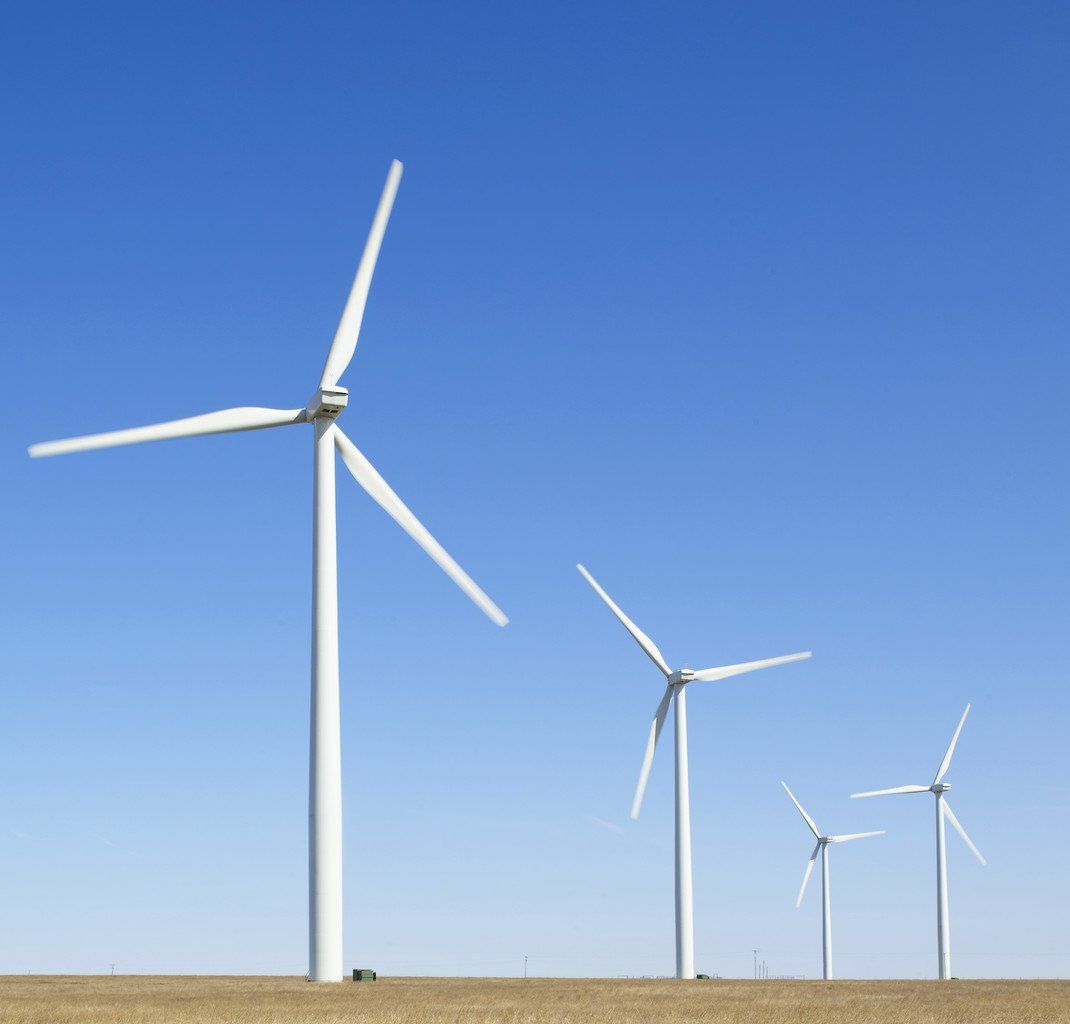
These modern wind turbines generate electricity
Image: Hamsterkiste
Windmills and watermills already existed in the Roman Empire 2,000 years ago. They may have been used much earlier, though. Their design has naturally changed over time, and there were quite a few different types.
They were also used for more than grinding grain or pressing oil. Windmills were used to irrigate fields or drain land. When silver, copper, lead, and iron were still mined in the Harz Mountains, waterwheels powered pumps that brought water up from underground so miners could work. Watermills also powered sawmills and metalworking facilities known as hammer mills. Later, mills were also used to generate electricity.
But after the steam engine was invented, fewer and fewer mills were needed. Many old mills fell into disrepair or were demolished. Some were restored and help preserve the memory of times gone by. Engineers have also borrowed some ideas from the old windmills. Today, large wind turbines generate electricity.
Find out: