


Land of Lakes
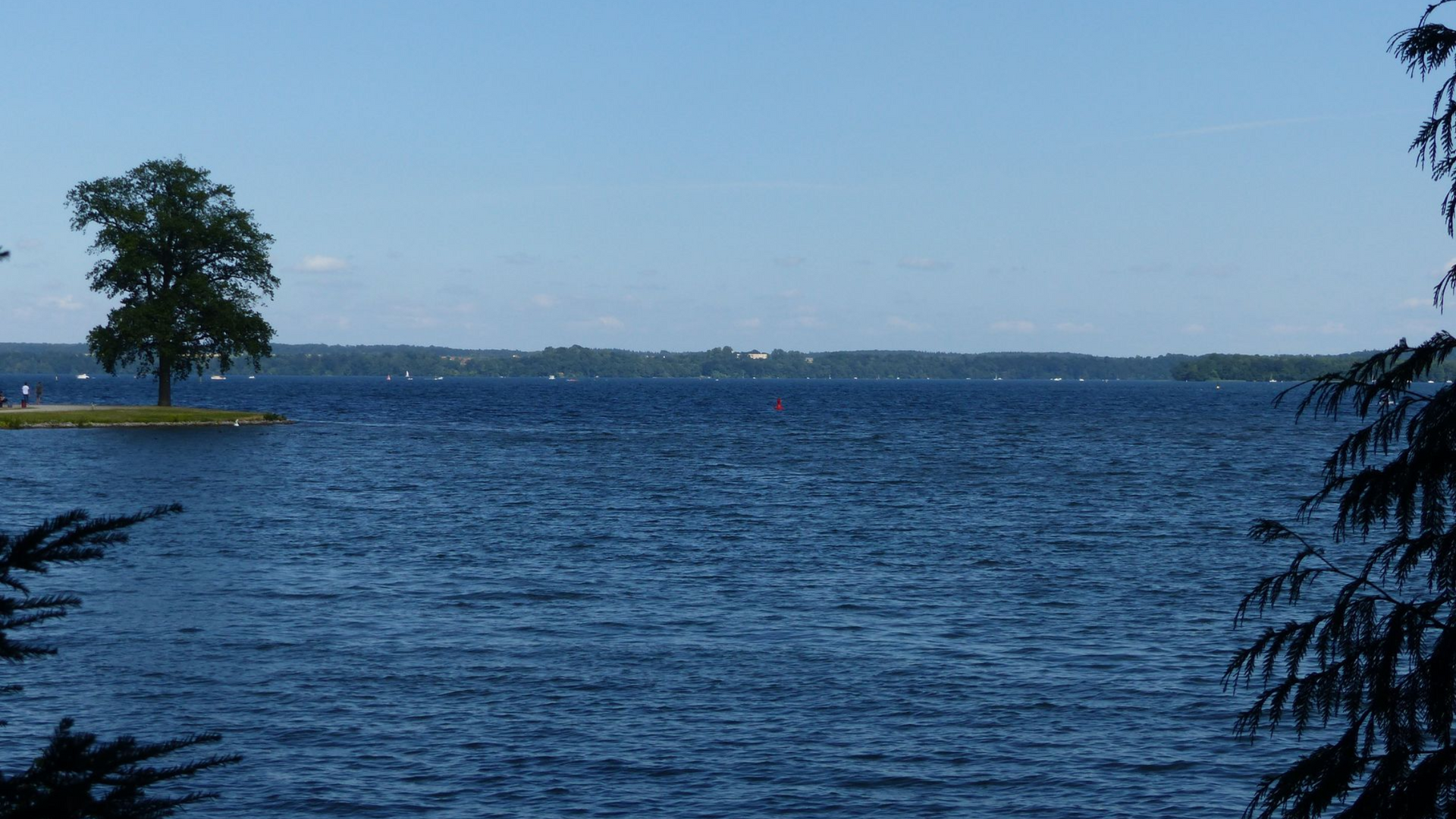
Lake Schwerin is just one of around 2,000 lakes in Mecklenburg-Western Pomerania
Image: Hamsterkiste
1 - When it gets really hot in summer, people in Mecklenburg-Western Pomerania have it good. They pack their swimwear, hop on their bikes or get into their cars, and head to the nearest lake. Nowhere else are there so many bodies of water where you can enjoy a swim and cool off.2 - Mecklenburg-Western Pomerania is a land of lakes. There are more than 2,000 in this federal state. And since only about 1.6 million people live here, that means just 800 residents share each lake.
3 - The largest lakes are Müritz , Schweriner See , Plauer See , Kummerower See , Schalsee , Kölpinsee and Tollensesee . Kleiner Jasmunder Bodden is also considered a lake. However, it was once a bay of the Baltic Sea, separated from the sea by a dam in 1869.4 - The lakes are part of a distinctive landscape known as the Mecklenburg Lake District. This landscape is a strip about 30 kilometers wide and 240 kilometers long. It stretches from Lübeck in Schleswig-Holstein to Eberswalde in northeastern Brandenburg. The landscape also continues east of the Oder, where it is known as the Pomeranian Lake District and the Masurian Lake District. The Mecklenburg Lake District also includes, for example, Ratzeburger See in Schleswig-Holstein and Werbellinsee in Brandenburg.5 - This concentration of lakes in a small area is connected to the last Ice Age. It began about 115,000 years ago in northern Europe. The climate grew colder, and the snow that fell in winter no longer melted in summer. The snow turned to ice, building up into enormous glaciers.6 - The glaciers’ own weight pushed them farther and farther south. As they advanced, they pushed large amounts of sand, gravel, and boulders ahead of them. The glaciers reached the coast of what is now Schleswig-Holstein and extended as far as Brandenburg. Eventually, the climate grew warmer again and the ice melted. What remained was a chain of hills, with deep channels and hollows in between.
7 - The hills are called terminal moraines. The water found its way to the sea and carved out the glacial valleys, from which the Elbe, Havel, and Oder rivers later formed. But a lot of water also collected in the channels and hollows shaped by the ice. That's how the lakes were formed—lakes people enjoy on hot summer days.8 - Many fish swim in the lakes, and even today many fishermen make their living from them. They say fishermen never go out on a lake alone. Once, a fisherman was out on Lake Schwerin when a large, hairy monster sat at the front of his boat, watching him work. He struck the shaggy creature with his oar. But it grabbed him and dragged him forcefully into the depths. The next morning, an empty boat was found. Even today, on clear nights, you are said to be able to hear splashing, as if there were a struggle, and a muffled cry.9 - Maybe that's just a nice made-up story. But you can believe everything else we've told you here about the lakes in Mecklenburg-Western Pomerania, because that's how it is and how it really was. You could go and see for yourself. But don't forget your swimsuit.

You can go boating on the islands
Image: Hamsterkiste

Swimming and splashing in the water is great fun
Image: Hamsterkiste

You can also simply enjoy the peace and the view
Image: Hamsterkiste

In addition to its many lakes, Mecklenburg-Western Pomerania also has the Baltic Sea
Image: Hamsterkiste