


Water is essential to life
Image: Hamsterkiste
What is water?
We cannot imagine our Earth without water. Two-thirds of its surface is covered by water. We could not live without water, and there would be no animals or plants. But what exactly is water? Scientists who study such questions are called chemists. They tell us that water is made up of oxygen and hydrogen. Oxygen and hydrogen are gases. We cannot see, feel, or touch these gases. But sometimes these gases combine. Then something new is created—something we can see, feel, touch, and even drink. It is liquid water. Two parts hydrogen and one part oxygen always combine to form tiny new particles called molecules—more precisely, water molecules. These molecules are always in motion. The warmer it is, the faster they whiz around.
When it gets very hot, the molecules bump into one another and need more space. They rise, and the water turns back into a gas. Water vapor forms. We can see this vapor above a pot of boiling water or an old steam locomotive.
When liquid water cools down sharply, the molecules move more and more slowly until they eventually freeze. This produces evenly shaped crystals. These crystals bond firmly together, forming what we call ice. The crystals are so tightly bonded that they form a solid layer. On a lake or pond, this layer eventually becomes thick enough for us to stand on or skate across. Very thick layers of ice can even support heavy trucks. Some ice contains crystals that have been firmly joined together for thousands of years. They have formed enormous icebergs or glaciers, among nature’s greatest wonders.
Find out:
- What do we call scientists who find out about water?
- Which two gases can form water?
- What needs to happen to the two gases for water to form?
- How many parts of these gases have to come together?
- When does water vapor form?
- What is needed for ice to form?
- What happens to the water molecules?
- Which ice formations formed thousands of years ago?
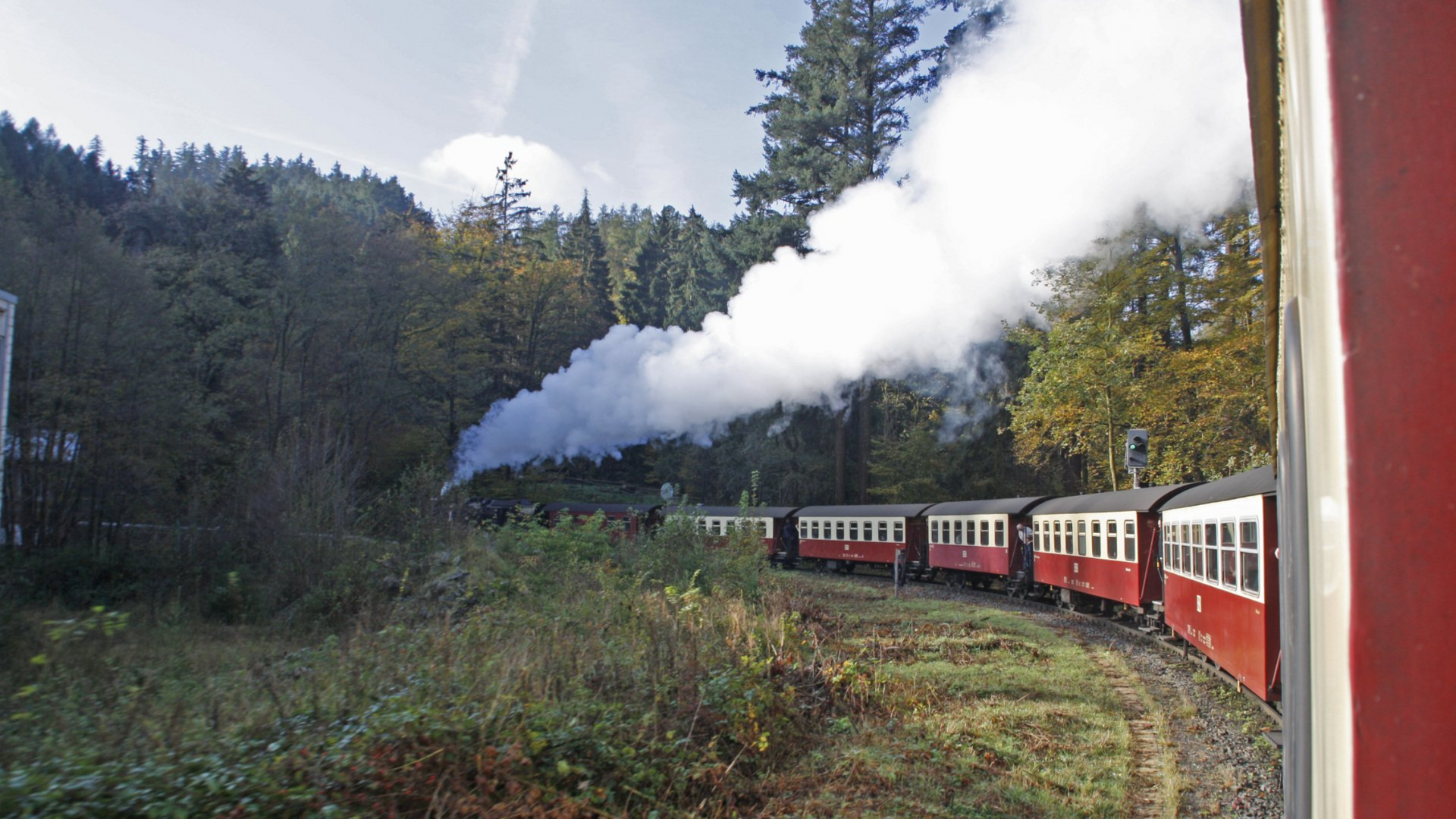
This locomotive emits water vapour
Image: Uwe Maschmeyer

This ice in the Rhône Glacier formed many thousands of years ago
Image: Hamsterkiste